Water Heater Failure and Flooding Cleanup in Lake Dallas, TX
When a tank splits it floods a garage, closet, or upstairs room fast. The local crews dry the slab, framing, and nearby walls.
(940) 400-1352Tap to call the 24/7 Lake Dallas line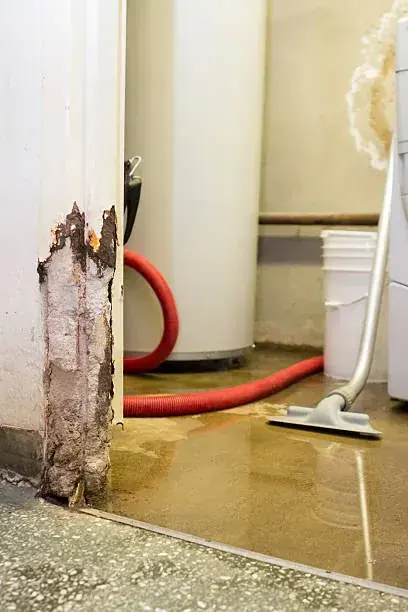
A water heater holds forty to fifty gallons under constant pressure and heat, so when the tank finally lets go it does not trickle, it floods. In a Lake Dallas home the heater often sits in the garage, a utility closet, or the attic, and where it sits decides how much damage a failure does. An attic or upstairs unit can flood two floors before anyone hears it.
How water heater failure and flooding is handled in Lake Dallas
Call and dispatch
The restoration team answers 24/7, and the nearest Lake Dallas crew heads out with pumps, air movers, and moisture meters.
Assess and stop it
The crew finds the source and the full reach of the water, including what soaked into the slab, subfloor, and wall cavities.
Extract and dry
The extraction crew pulls the standing water, then runs air movers and dehumidifiers to a verified dry standard, not just the surface.
Verify and document
Moisture readings are logged until the structure is dry, then the loss is documented with the photos and daily readings an adjuster needs.
When a water heater lets go
Tanks fail in two ways, and both end in water on the floor:
- A slow seep from a corroded fitting or the tank base, which soaks the platform and wall for weeks
- A full split, when years of sediment and corrosion give way and the tank empties at once
- A failed drain pan or a pan line that never actually carried water away
- A pressure-relief valve that lets go under high water pressure
Hard minerals in North Texas water build sediment inside a tank and shorten its life, so an eight-year-old heater is worth watching. A full split is close to a burst pipe in volume.
Water heater flooding a room? Shut off the water and the tank, then call and a crew is on the way across the lake area to dry it out.
☎ Call (940) 400-1352The water heater flood response
Restoration crews handle the water and the hidden wicking a tank flood leaves behind:
- Confirm the water and the heater are off, then extract the flood
- Check the slab, the wall base, and any floor below an attic or upstairs unit with meters and a thermal camera
- Dry the slab, framing, and adjacent walls to a verified standard
- Document the loss and bill your carrier while a plumber swaps the tank
Water that reached a finished floor moves into structural drying, and a slow seep that sat for weeks can become a mold job.
Where the tank sits matters
An attic or upstairs heater should drain to the outside through a working pan and line, so a failure sheds water safely instead of into the ceiling. The Ready.gov floods steps help in the moment, and the crews dry to the EPA mold standard so nothing grows behind the wall.
Insurance and preventing the next one
The sudden water damage from a failed water heater is usually covered in Texas, even when the tank itself is not. Local water damage pros document the loss and bill your carrier directly. To avoid a repeat, flush the tank yearly, watch an older unit for rust or seepage, and make sure the drain pan and line actually carry water away from finished space.
Why the Lewisville Lake area calls the local pros first
Rapid local response
The response team answers 24/7, and the nearest crew heads out the moment you call, day or night, across the Lewisville Lake area.
IICRC S500 drying standard
Trained crews with truck-mounted extractors, air movers, and moisture meters dry to a verified standard, not a mop and a fan.
Claim-ready documentation
The loss is documented with photos and daily moisture readings, the paperwork an adjuster needs to move a claim.
Local water damage experts
Slab leaks, storm runoff, expansive clay, and hail-driven roof leaks. The local pros know how water moves in North Texas homes.
Across Lake Dallas and the Lewisville Lake area
Rapid Recovery Restoration covers Lake Dallas and south Denton County, day or night.
Based in Lake Dallas, the local crews cover the whole Lewisville Lake area and the I-35 corridor, day or night, with rapid response across south Denton County.
Coverage includes Lake Dallas, Corinth, Hickory Creek, Shady Shores, Highland Village, Lewisville, The Colony, Little Elm, Flower Mound, and Denton.
See every neighborhood and ZIP covered ›Related restoration services
Lake Dallas water damage questions, answered
My water heater flooded the room, can you help today?
Yes. Crews answer 24/7 and reach most of the lake area. Shut off the water and the tank if you can, then call and the local crews handle the rest.
Why did my water heater fail so soon?
North Texas water is hard, so sediment and corrosion build inside the tank and shorten its life. An eight-year-old heater is worth watching for rust or seepage.
Do you dry the slab and framing?
Yes. Restoration crews dry the slab, the wall base, and the framing, and the crews check any floor below an attic or upstairs unit, since a tank flood wicks into places you cannot see.
Will insurance cover a water heater flood?
The sudden water damage is usually covered in Texas, though the tank replacement itself may not be. Local water damage pros document the loss and bill your carrier for covered work.
What about an attic or upstairs water heater?
Those are the worst case, since a failure can flood two floors. Crews check and dry the ceiling and floor below, not just the room the heater is in.
How do I keep this from happening again?
Flush the tank yearly, watch an older unit for rust and seepage, and make sure the drain pan and line actually carry water outside.
A local Lake Dallas crew is standing by
Water sitting means damage spreading. Call Rapid Recovery Restoration and a Lake Dallas crew heads out across the Lewisville Lake area, day or night.
(940) 400-1352Call now, a local crew picks up day or night